Muriel: Memories of Rochester

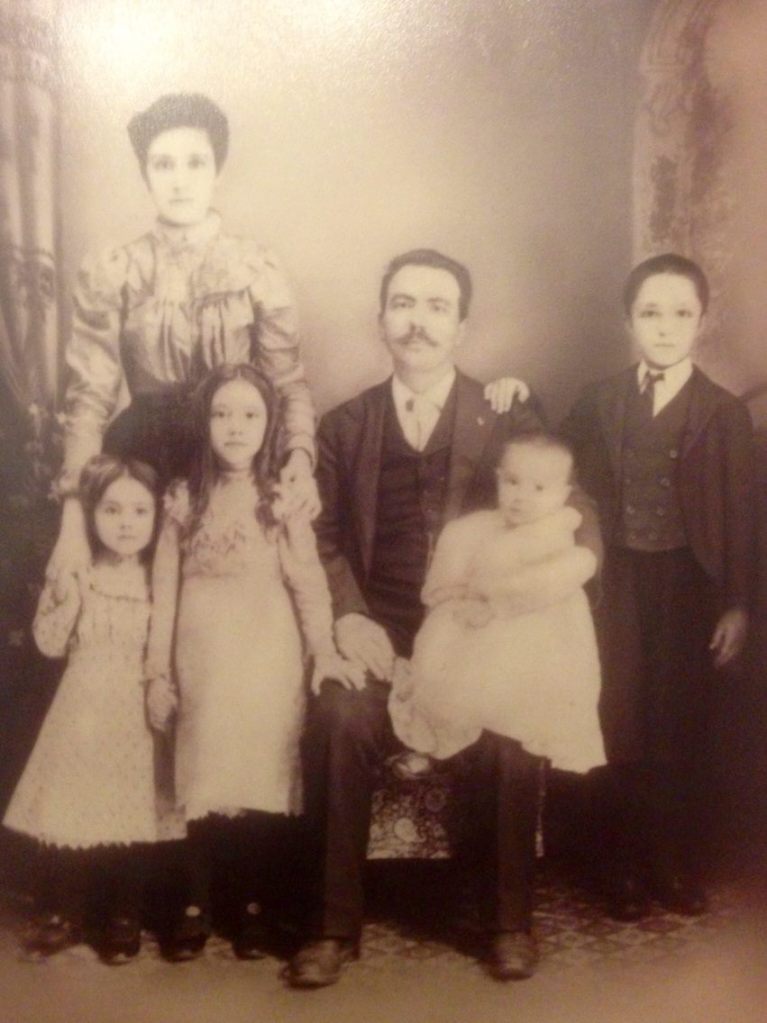
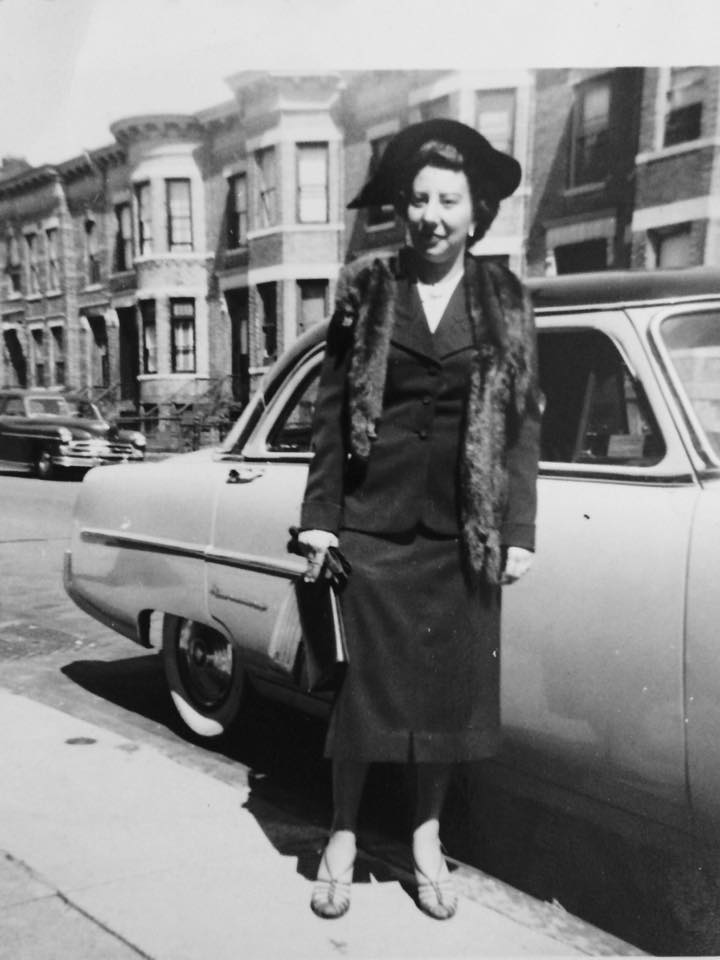
On December 20, 1923, I entered this world as the third daughter born to Alvina and Vincenzo “James” Chimenti. I was born at home with the assistance of a midwife, as was the custom in those days.

My grandmother, who everyone called “Mama Damis,” owned the four-family apartment building in Brooklyn where I was born.  Uncle Pete and Aunt Helen lived on the first floor, Mama and Papa Damis on the second floor, Aunt Lizzie and Uncle Johnny on the third floor, and we lived on the fourth floor.

My brother Jim was born 18 months after me.  He and I were very close. I even went to his high school prom with him in 1944. My high school had cancelled my prom two years earlier, as all the neighborhood boys had just left for war in the spring of 1942.

As a young boy, Jim was sickly.  Mom seemed to always dote on him and give him special care, especially after he had whooping-cough.  She gave him the cream from the top of the milk bottles along with vitamins, eggnog, and cod liver oil.  (She never could get any of us girls to take the cod liver oil.)

I, on the other hand, was a very active child and hardly ever stopped moving. I can remember running up and down the stairs in our apartment building and my dad would tease me saying, “Don’t you ever sit still?”

My father worked in a shoe factory, and he worked long hours. It was reliable work though, because as Dad said, people always need shoes.  When Jim was a toddler, my father was offered a position as the superintendent of a shoe factory in Malden Massachusetts.  

When we first moved to Malden, I missed Mama Damis so much that for once I stopped running and singing. Mama was worried, so she asked Aunt Tillie to come up to Massachusetts and take me back to New York for a visit.  We traveled by train. It was exciting but as soon as we arrived in Brooklyn, I became so homesick for my family that my Aunt had to turn around and bring me right back home.

As fate would have it, shortly after this Dad was offered a better position with more pay in Rochester, New York, so again we moved.

As I mentioned earlier, Jim and I were very close in age, and we did everything together.  In fact, when one of us got sick, the other one soon followed — measles, chickenpox, mumps, etc.  The best part of being sick was that we got a lot of attention.  Dad came home with boxes of candy for us and other presents.  When Jim and I got the mumps, our parents bought us a white bunny rabbit.  We kept it until it grew too big to live in the house, and that is when we met our neighbors, Charlie and Arthur.

Charlie and Arthur lived together in an apartment over a restaurant that they owned.  The restaurant, called the Eagle Tea Room, was situated on a large piece of property. In my opinion it was the fanciest and most exquisite restaurant I had ever seen.  

Charlie and Arthur kept chickens and rabbits, and they had a beautiful vegetable garden and small orchard.  After they took our rabbit, they told us we could go see her whenever we wanted.  My father, who loved to brag about the wonderful fruits and vegetables in his native Italy, enjoyed visiting with Charlie and Arthur and talking about their restaurant.

Charlie and Arthur invited our family to pick as much fruit from their trees as we wanted.  One day, in cherry season, Dad took us next door and we picked baskets full of cherries — all the while eating as much as we possibly could.  We brought the buckets home for Mama to enjoy.  She started splitting the cherries and lo and behold every single cherry had a worm in it.  She gave us all laxatives and threw away our whole harvest!

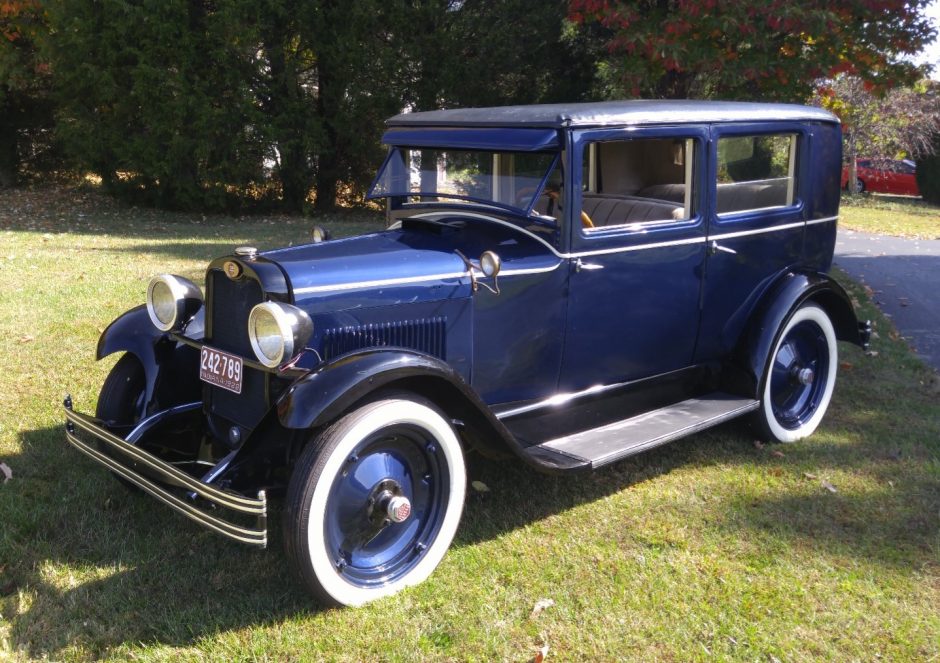
Rochester is not too far from Niagara Falls, so our family made frequent trips to the falls with Charlie and Arthur.  What a picnic lunch they would pack!  We always traveled in Dad’s Essex, which I remember he purchased for $600.  It was blue with a trunk on the outside back of the car and a running board.  We had never owned a car in the city and Dad was very proud of the Essex. I remember he spent every Saturday morning washing and polishing the car.

We only lived in Rochester for a few years and then we moved back to Brooklyn. I became very busy with church and school and we never made it back to visit. Still, to this day I have such happy memories of Charlie and Arthur and the Eagle Tea Room.
Mildred: An Adventure with Vera

Erin Darling,

I’ve decided that the best way to describe my childhood is to start with some of the first things I can remember.

My mother’s name was Alvina Damis.  She was born on the East side of Manhattan near Chinatown in 1894. Mama had three brothers and four sisters. I was named after her youngest sister, Mildred Carmella. When I was little, “Millie” was a popular name but Mama told me never to answer to any other name than Mildred.  

My father’s real name was Vincenzo Chimenti.  He was born in Italy in 1894 and came to America when he was six years old. When he started school, the teachers told him that his name was “James,” so that’s the name he used.  He never finished school and went to work in a shoe factory at a very young age.  He loved music but his father wouldn’t allow him to have lessons.  Grandpa told Papa that music would lead to a “fast life.”

My earliest memory is of living at 352 59th Street in Brooklyn.  It was a four-story building and my mother’s parents, Mama and Papa Damis, owned the whole thing.  They lived on the third floor.  

My mother’s brother Uncle Pete lived on the first floor with his children, Margaret, Theresa, Anna, and Nicholas.  My cousins Frances, Vera, and Betty lived on the second floor with Aunt Mildred.  I lived on the fourth floor with my parents and my two sisters.  My sister Rose was two years older than me and Muriel was three years younger.

My brother James, who we all called Jim, was born on March 13, 1926.  Rose and I sat on the stoop waiting for the doctor to come and deliver the baby. When the doctor arrived, Rose said to me, “The baby is in the black bag.”  I wasn’t sure if I believed her, but she was proved correct several hours later when we were called in and told we had a baby brother.

I loved our building.  Between school friends and cousins, the halls were always filled with children.  We lined up our dolls and played school on each floor’s landing and skated up and down four flights of stairs.  We played board games and jacks on the front stoop and baseball in the streets. I even remember sledding down 59th street during the winter months into piles of snow.

During the summer, the girls would play hopscotch and jump rope.  I was the best in the neighborhood at double-dutch.  I always wanted to learn to ride a bicycle, but my parents thought it was too dangerous.  We didn’t have air conditioning, so at night we kept cool by sitting out on the fire escape or going up on the roof.

Sometimes I played card games in the evening with my Aunt Mildred while we waited for the men to get home from work.  Aunt Mildred liked to listen to programs on the radio like The Shadow and Amos and Andy.  She had a lot of Victrola records and she would sing for us.  She had a beautiful voice.

My cousin Vera and I were the same age and we were best friends. We went to the elementary school around the corner, P.S. 140.  Vera and I did everything together.  On the weekends and during summer vacation, we played games and went to the movies for five cents.  Sometimes, we saw vaudeville shows for ten cents.  At lunchtime during the school week, we would walk from school to our building and have lunch with Mama.

One time, Mama told me and Vera to watch Muriel, who was about six years old.  It was a nice day, so we went outside to play hopscotch.  A man came up to us and asked us if we would like to earn ten cents each.  This was a lot of money in those days, so of course we said we were interested.  

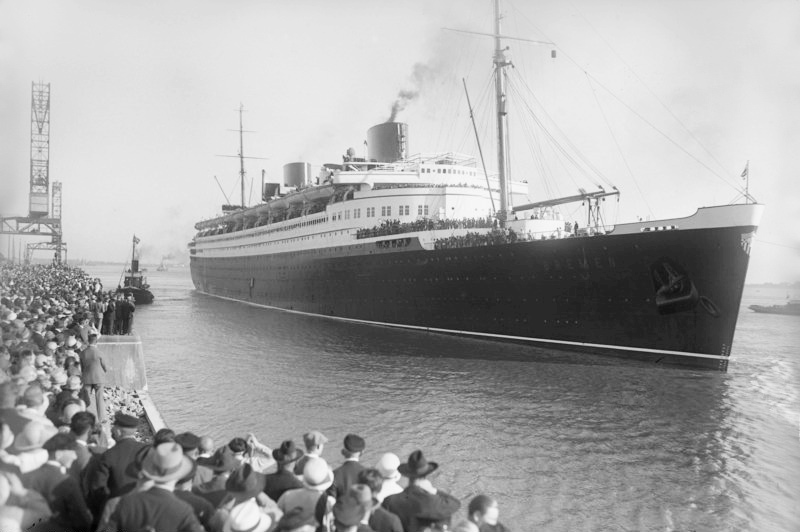
The man gave us a big black suitcase and told us to take it to the docks and deliver it to the Steamship Bremen.  We agreed — even though we knew we were not supposed to go anywhere near the boatyard — and he put the suitcase in our Red Ride wagon.  He gave Vera a dime and said he would pay me the rest when we got back.  

Well, someone must have seen the man talking to us and told my mother because when we got back from the docks, Mama was waiting on the stoop for us.  It was the only time I can remember being spanked, except for one other time when I refused to take my cod liver oil.  We never saw the man again and I never got the ten cents he promised me.

Alvina: Onward to Brooklyn

As I have stated previously, my grandparents lived apart from us, and that bothered my grandfather. He thought families belonged together. Grandpa had saved a little money and suggested buying a home for us.  He bought a two-family dwelling in Brooklyn, on 20th Street and Third Avenue for two thousand dollars, in cash. It was a parlor floor and basement type and our rooms were on the top floor.

The house had belonged to a very fine family by the name of Etherington.  Mrs. Etherington had lost her husband, and when her three children married she did not care to live in the house anymore, so she went to live with one of her daughters in California. When she moved out, she left a square piano in the parlor.  She told us she had no use for it as her daughter had married very well and bought herself an upright.  My father Jimmy and I were so happy when we saw the piano and we taught ourselves to play by ear and, if I may say so, we became very adept at it.  

On Sunday nights, Jimmy would bring his friends and I would bring mine. We would sing and dance to the tune of the old piano.  On cold winter nights, Mama would serve hot lemonade and cookies and as I look back how, I realize how happy we were then with the simple things.

We didn’t stay long on Twentieth Street.  We moved to Bay Ridge on Thirty-Fourth Street and Fourth Avenue.  We left my grandparents at the Twentieth Street home.  My grandfather renovated the parlor floor and worked there until he died.  Grandma then went to live with Aunt Katie.  The house was willed to my father, who sold it for four thousand dollars.

I have so many great memories of my grandfather.  He loved his adopted country, although he always boasted that the fruits and vegetables were much better in Italy.  When I graduated from public school, my grandfather was so proud to think that I had a diploma, when most of my friend did not graduate.  There were so anxious to get their working papers that they didn’t care to finish the eighth grade.  All they wanted was to earn money and what did they earn at their first jobs? About three-fifty a week.

Shortly after we moved to 34th Street, work started on the 4th Ave subway, and it was such a mess.  However, that is when I met Jim Chimenti.

My brother Jimmy and Jim Chimenti organized dances at a local social club.  My girlfriend and I used to go to these dances, but Jim and I seldom danced together.  He had his friends and I had mine.  Jim was a good dancer, however, and I enjoyed dancing with him.  The popular dances at that time were waltzes, polka, and the “Turkey Trot.” We loved to dance and sing the lyrics, “Everybody’s doing it, doing it, doing it.  Everybody’s doing WHAT?  The Turkey Trot!”

Blanche Calimano neither danced nor sang but she used to enjoy going out with us.  The biggest surprise was when my brother and Blanche decided to get married.  Then Jim Chimenti realized that this would be the end of the social club dances, and that he would have no excuse to see me.  I came home from work one day and Jim was waiting for me outside.  He asked me on a date, and of course I invited him in.  We dated for three years before we got married in 1915.  We were both twenty years old.

Alvina: Earliest Memories

-By Alivina Chimenti Damis

When my father Nicholas came of age at 23, he went back to Lungro in Calabria, Italy to marry my mother, Mary Alessio.  The marriage was planned by the families.  My grandfather wanted a good match for his son, and the Alessio family was well regarded, though poor. My mother was only sixteen but she had received a good education and was already working as a schoolteacher.  After the wedding in Lungro, Papa brought Mama to America along with her six-year-old brother, Giacobbe (Jacob), who she raised as a son. It was 1889.

Initially, my parents lived with my grandparents at St. James Place. When my brother Jimmy was born in 1890, my parents moved to Mott Street, directly opposite Chinatown. (In those days, Chinatown was only four square blocks — Pell Street, Doyers Street, Mott Street, and Park Row.)  I was born in 1894 and my parents named me Alvina after my maternal grandmother.  With three kids in the house now, my parents moved again, this time to an apartment on Canal Street.

Mary and Nicholas Damis, with (left to right) Elizabeth, Alvina (author), Peter, and Jimmy

The apartments back then weren’t anything like they are today. For starters, the house was always cold, especially at night. The only source of heat was the kitchen range, heated by wood or coal if you could afford it.

Mama eventually had six more children: Peter, Elizabeth (Lizzie), Matilda (Tillie), Anna, Jack, and baby Mildred Carmella. There was always so much work to do. I remember Aunt Katie warming Cousin Georgie’s socks in the oven so he would put them on nice and toasty in the morning.  My brothers and sisters used to laugh at him and poke fun because Mama didn’t have time to cater to us like that.

Once a week, on Saturday night, we had to take baths.  My mother would put a tub of warm water on the kitchen floor and one at a time, the kids would bathe. There was a kettle of water constantly on the kitchen range, so we could warm up the water as needed. When we went to bed a night, my mother heated water in a bottle, put the water in a jug, and put the jug into our beds to warm them up before we got into them.  

Then, there was the weekly clothes wash.  On Monday, Mama would first have to heat the water, then put it into two tubs–one for white clothes and one for colors.  She would soak the clothes overnight and next morning rub them one by one on a washboard, then put then on a large boiler on top of the stove.  This would boil all morning until the clothes were clean to Mama’s satisfaction.  Then she would rinse them two or three times in cold water and hang them out on a long wire to dry in the sun and wind.

In addition to finishing the laundry, we ironed on Tuesday, which was by itself an all-day chore.  Wednesday we mended and darned (socks included). Thursday was cleaning house day, and Friday was for shopping (a loaf of bread was two cents, a pound of butter five cents, and eggs were eight cents a dozen). Saturday was baking and cooking all day long.

Sunday was my favorite day.  The whole family would go to church in our Sunday clothes, which were reserved for this day of the week. My father was a tailor, like his father, and because of this our clothes were always impeccable.  After church, company would come over for dinner.  The little children would go out and play for a few hours and older ones would take a walk and end up buying an ice-cream soda.  It was only five cents, but it was a luxury.

I grew up in the candlelight era. At dusk, the lamp lighter came around with a wand lighting up the lamp posts.  The lamps always looked so pretty when they were lit up, especially if there had been a snowstorm. The snow and ice looked like diamonds.

In our apartment, we carried candles from room to room to light the way.  These candles cast shadows as we walked into the dark rooms, and sometimes it was scary. I remember a Jewish family who lived in our neighborhood. Every Friday evening at sundown, I would drop whatever I was doing and go to their house to light up all the candles in their home.  They paid me ten cents a week!

There were so many people who used to have fires because of the candles.  One family we knew, the Christies, were completely burned out of their home.  It was bitter cold with ice and snow on the ground on Christmas Day. The Christies had small candles on their Christmas tree and the whole tree went afire.  Their curtains caught fire and before the fire engine arrived (which was drawn by horses), they were completely burned out.

The neighbors all got busy.  They took the family into their homes, clothed and fed them, and put up beds for them until they could get on their own again.  My mother, who was always ready to help whenever there was trouble, gave away clothing and food.  One bitter cold day my father was going out to work and when he went to get his coat, he learned Mama had given it to Mr. Christie.  Poor Papa had to go without.

When kerosene lamps came into usage, everybody welcomed them.  If you wanted the lamps to glow brightly, though, they had to be kept clean.  We would take them apart every day, fill up the glass bottoms with kerosene, put a new wick in them and shine the glass globe that went on top.

After a few years the city had gas pipes put in underground and we were very happy that we were going to have gas light.  Gradually, gas stoves were installed and gas water heaters so that we could have hot water when we wanted it.  No more heating water on the stove to take baths and wash clothes.  Of course, the broilers were not connected with the gas stoves, and we had to light the pilot light located at the bottom of the stove.  But, we were happy.

Later, we had wash tubs installed in our kitchens, and bathtubs, and private toilets. No more scary trips to the backyard to use the toilet! Each time these improvements were made, rents would go up but then wages would rise, so we were glad to pay these higher rates. According to what I remember, when I got married in 1915, I got a beautiful apartment in a two-family house for fifteen dollars a month.

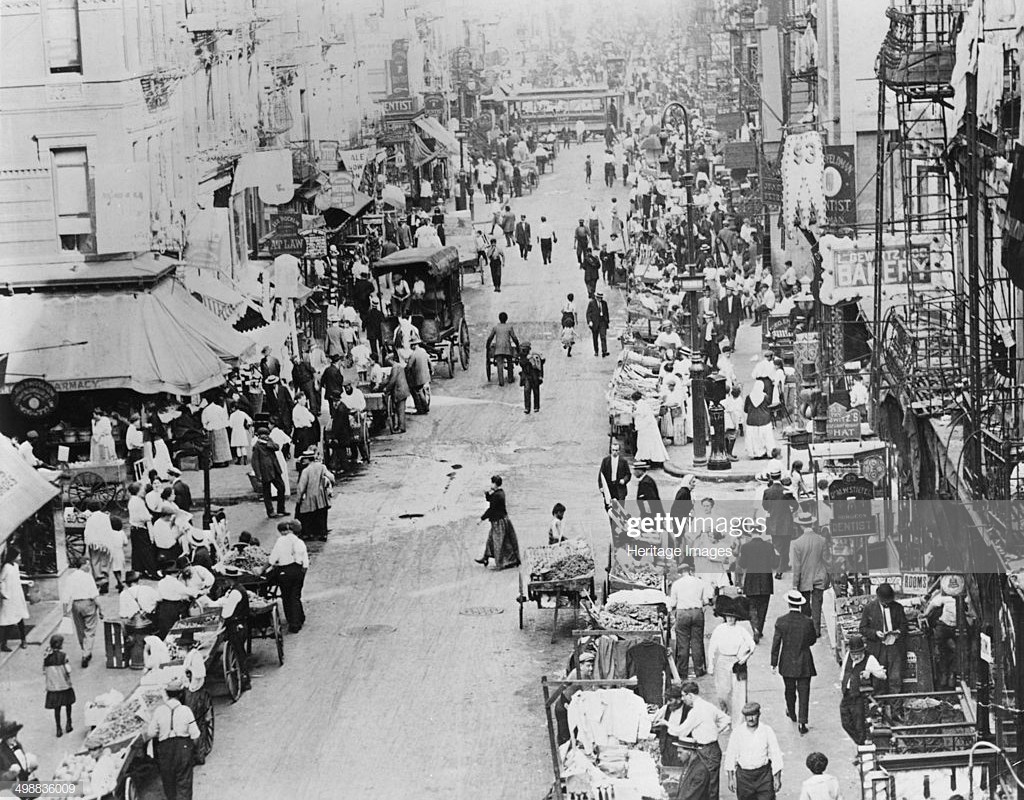
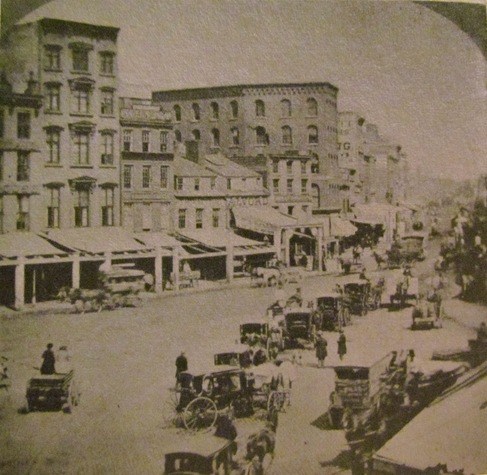
Remembering my childhood on Canal Street brings happy memories.  When we moved there, four family houses stood in a row, over stores. Canal Street was a thoroughfare, and horse drawn trolleys went from the East Side to the West. The West Side was separated from the East Side by another wide thoroughfare, Broadway.  The West Side was used for industry and extended all the way down to the river, where large ships came from all over the world with imports and exports.  The East Side extended from Broadway to Delancey Street, and beyond that started the Uptown District.

All us kids attended Public School 23 on Mulberry School.  There were children of all nationalities, and we got along well. I was good with languages and learned how to speak a little German and Yiddish (of course I also spoke English and my parents’ Calabrian-Italian dialect). After school, we played on the streets of New York City.  We liked to jump rope, play tag, and all sorts of other games.  The organ grinder with a monkey came around once a day.  Oh how we waited for him!  We would follow the organ grinder for blocks as his monkey, who was tied to the organ by a long string, would go around with a tin cup to all the storekeepers who would put a few pennies in his cup.

Sometimes, we would go over to Chinatown and buy Lychee Nuts.  They were two for a penny and fortune cookies were a penny a piece.  On the 4th of July, we went to Chinatown to buy firecrackers, a penny a piece. Although our neighborhood bordered Chinatown (and has since become a part of it), it seemed to us kids that the Chinese stayed within their own territory.  They were peculiar to us — they wore their hair in long pigtails down their backs, wore sandals all the time, and smoked from long pipes.  Once a city social worker disappeared in Chinatown.  Her disappearance was never solved.

Alvina: The Beginning

By Alvina Damis Chimenti

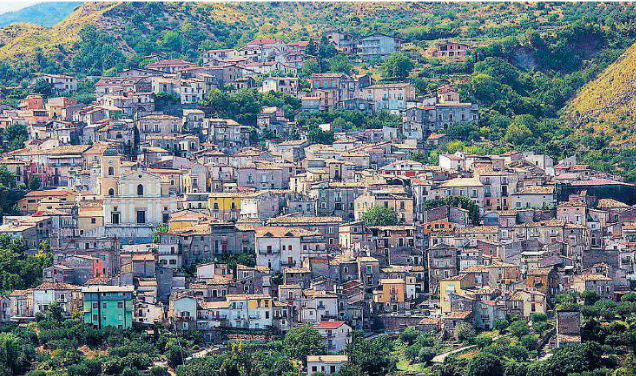
The first documents regarding Albania date from the fifteenth century, I believe. According to these documents, Albanians are descendants of the ancient Thracians and Illyrians. Many years ago, our ancestors migrated from Albania to the Calabria region of what today would be considered southern Italy – the “toe” of the boot. They settled in the small town of Lungro where they mingled with and married native Italians.  

My grandfather Gennaro Damis and my grandmother, whose maiden name was Elizabeth Balzano, were married in Lungro around 1865. They had four children together: Nicholas, Mary, Raquel (Katie), and Letizia (Elizabeth). I am sorry to say that they may have had several other children who did not survive beyond infancy, but I do not know more about this.

During the process of Risorgimento, or “unification” of Italy, life had become very difficult for the people of southern Italy, and many Italians had to make the difficult decision to leave their homes in search of better opportunities for their families. Gennaro and Elizabeth, together with their children, left Lungro for New York in the spring of 1886.

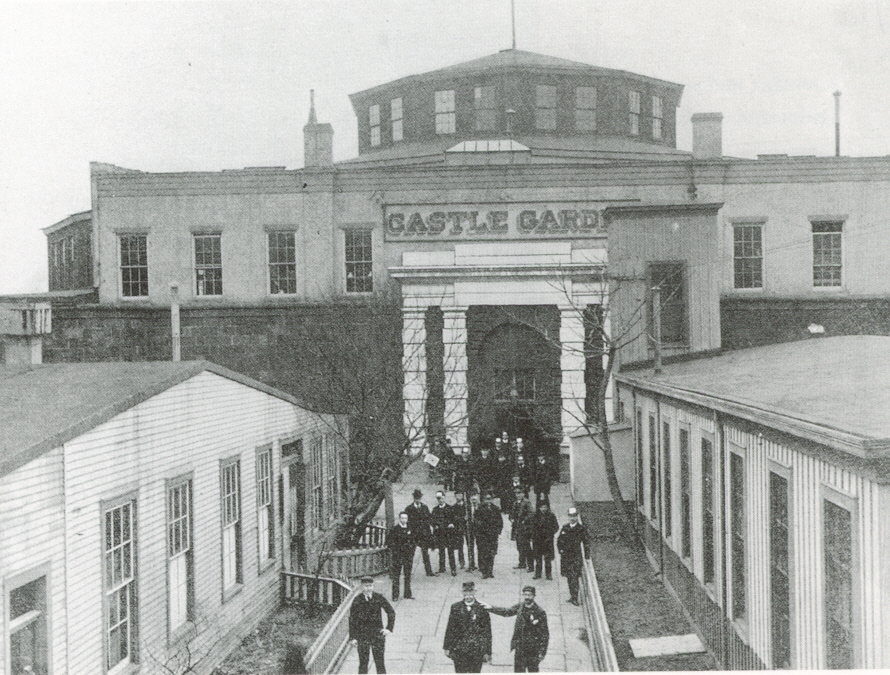
The Ellis Island Emigrant Processing Center had not yet been built when my family arrived.  At that time, new immigrants arriving in New York were taken instead to Castle Garden for processing.  Castle Garden was a fort that had been built around the time of the War of 1812, and I understand it was a miserable place.  

Castle Gardens Processing Center

My grandfather was asked if he had a trade (he did; he was a fine tailor), and whether he had a place to live.  Fortunately, a few friends of my grandparents who had come to America previously came to vouch for the family, so my grandparents were released immediately. Some poor immigrants who knew nobody had to stay on the island indefinitely, and sometimes they were even send back to their native lands.  My family, however, was welcomed into their friends’ home while they searched for work and a place to live.

According to my father, the family arrived in Manhattan on the day a big celebration was taking place.  There were banners flying, bands playing, and people gathered in the streets. My father told me of a man named John, who landed on the same day that he did.  He was crossing the street when a team of runaway horses came tearing down the street.  Someone shouted, “Look out, Johnny!” and pushed him out of the way.  He couldn’t understand how the man knew his name and said, “What smart people there are in America!”  I don’t think this story was true, but my father always chuckled when he told it.

My grandparents soon found an apartment on St. James Place, near Chatham Square. Gennaro got a job with an exclusive clothing establishment known as Levy & Son, which sold clothing for men and boys.  It was a high-class store and my grandfather was so proud to be paid with cash, unlike in the old country, where he would have traded for services.

St. James Place, circa 1900’s

Shortly after arriving in New York, my Aunt Mary came of age at 16. She married John Frega, who worked as a street cleaner for the Sanitation Department.  The men wore heavy while uniforms which they had to keep spotless and they had to keep the streets immaculate.  John earned fifteen dollars a week and considered himself well-paid.  Mary and John had sixteen children, but only five survived.  It seemed the little babies could not live beyond their second birthday.

Aunt Katie married a politician named George Capparelli. They had only one child, Georgie. Uncle George was a member of a Democratic club know as Tammany Hall. He was a clever operator who earned his living issuing citizenship papers to poor ignorant immigrants and charged them a fortune. Of course, these papers were illegal and the government eventually caught up with him. He was convicted and sentenced to a year in Sing Sing Prison in 1899.

Uncle George did not stay in prison very long, however.  While in prison, he wrote to the Governor of New York, Theodore Roosevelt, and asked for a pardon.  After a few weeks, he was released and sent home.  From that day on, George became a Republican and campaigned very hard among the Italian people getting their votes for Roosevelt, who was running for President of the United States.

Elizabeth went into the convent at the age of fifteen, joining the Missionary Sisters of the Sacred Heart of Jesus, of which Mother Frances Cabrini was the Mother Superior.  Mother Cabrini worked tirelessly building schools, hospitals, and orphanages from New York to Chicago and Elizabeth, who had taken the name of Sister (later, Mother) Berchmans, traveled with Mother Cabrini everywhere she went.  

After an epidemic of smallpox took the lives of a number of nuns in New York, Mother Cabrini wanted a burial place just for the nuns.  She solicited money from the wealthier immigrant families of New York.  My grandfather (who was hardly a “wealthy immigrant”) donated a thousand dollars — an astronomical sum — towards this goal.  

Eventually, Mother Cabrini was able to buy a beautiful piece of property in upstate New York, overlooking the Hudson River.  It was known as West Park Cemetery and it exists today, although the property has expanded into a discernment center for women curious about taking Orders. Mother Cabrini has been canonized by the Roman Catholic Church as the Patron Saint of Immigrants.

When my father came of age at 23, he went back to Calabria to marry my mother, Mary Alessio.  The marriage was planned by the families who had known each other in Lungro.  My grandfather wanted a good match for his son, and although the Alessio family was poor, they were well regarded within the community. My mother was only sixteen but she had received a good education and was already working as a schoolteacher.

After the wedding in Lungro, Papa brought Mama to America. They traveled in steerage class aboard the brand-new SS Augusta Victoria. The newlyweds brought Mary’s six-year-old brother, Giacobbe along with them. Once they landed in New York, Giacobbe became Jacob. It was 1889.