-By Alivina Chimenti Damis
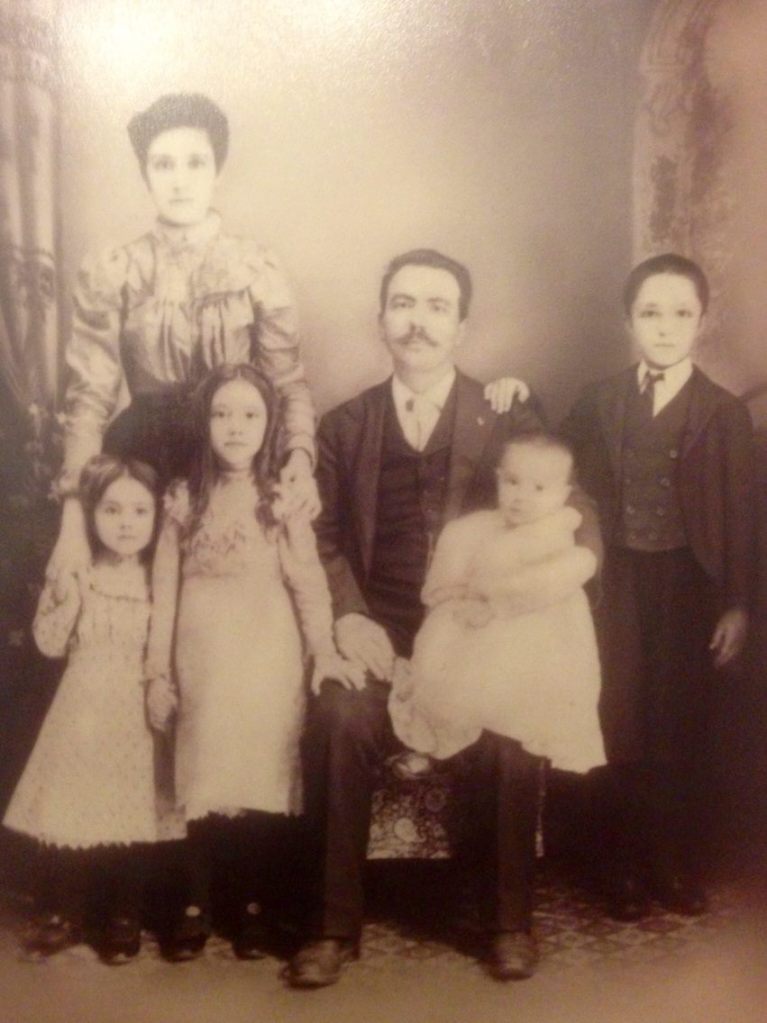
When my father Nicholas came of age at 23, he went back to Lungro in Calabria, Italy to marry my mother, Mary Alessio. The marriage was planned by the families. My grandfather wanted a good match for his son, and the Alessio family was well regarded, though poor. My mother was only sixteen but she had received a good education and was already working as a schoolteacher. After the wedding in Lungro, Papa brought Mama to America along with her six-year-old brother, Giacobbe (Jacob), who she raised as a son. It was 1889.
Initially, my parents lived with my grandparents at St. James Place. When my brother Jimmy was born in 1890, my parents moved to Mott Street, directly opposite Chinatown. (In those days, Chinatown was only four square blocks — Pell Street, Doyers Street, Mott Street, and Park Row.) I was born in 1894 and my parents named me Alvina after my maternal grandmother. With three kids in the house now, my parents moved again, this time to an apartment on Canal Street.
The apartments back then weren’t anything like they are today. For starters, the house was always cold, especially at night. The only source of heat was the kitchen range, heated by wood or coal if you could afford it.
Mama eventually had six more children: Peter, Elizabeth (Lizzie), Matilda (Tillie), Anna, Jack, and baby Mildred Carmella. There was always so much work to do. I remember Aunt Katie warming Cousin Georgie’s socks in the oven so he would put them on nice and toasty in the morning. My brothers and sisters used to laugh at him and poke fun because Mama didn’t have time to cater to us like that.
Once a week, on Saturday night, we had to take baths. My mother would put a tub of warm water on the kitchen floor and one at a time, the kids would bathe. There was a kettle of water constantly on the kitchen range, so we could warm up the water as needed. When we went to bed a night, my mother heated water in a bottle, put the water in a jug, and put the jug into our beds to warm them up before we got into them.
Then, there was the weekly clothes wash. On Monday, Mama would first have to heat the water, then put it into two tubs–one for white clothes and one for colors. She would soak the clothes overnight and next morning rub them one by one on a washboard, then put then on a large boiler on top of the stove. This would boil all morning until the clothes were clean to Mama’s satisfaction. Then she would rinse them two or three times in cold water and hang them out on a long wire to dry in the sun and wind.
In addition to finishing the laundry, we ironed on Tuesday, which was by itself an all-day chore. Wednesday we mended and darned (socks included). Thursday was cleaning house day, and Friday was for shopping (a loaf of bread was two cents, a pound of butter five cents, and eggs were eight cents a dozen). Saturday was baking and cooking all day long.
Sunday was my favorite day. The whole family would go to church in our Sunday clothes, which were reserved for this day of the week. My father was a tailor, like his father, and because of this our clothes were always impeccable. After church, company would come over for dinner. The little children would go out and play for a few hours and older ones would take a walk and end up buying an ice-cream soda. It was only five cents, but it was a luxury.
I grew up in the candlelight era. At dusk, the lamp lighter came around with a wand lighting up the lamp posts. The lamps always looked so pretty when they were lit up, especially if there had been a snowstorm. The snow and ice looked like diamonds.
In our apartment, we carried candles from room to room to light the way. These candles cast shadows as we walked into the dark rooms, and sometimes it was scary. I remember a Jewish family who lived in our neighborhood. Every Friday evening at sundown, I would drop whatever I was doing and go to their house to light up all the candles in their home. They paid me ten cents a week!
There were so many people who used to have fires because of the candles. One family we knew, the Christies, were completely burned out of their home. It was bitter cold with ice and snow on the ground on Christmas Day. The Christies had small candles on their Christmas tree and the whole tree went afire. Their curtains caught fire and before the fire engine arrived (which was drawn by horses), they were completely burned out.
The neighbors all got busy. They took the family into their homes, clothed and fed them, and put up beds for them until they could get on their own again. My mother, who was always ready to help whenever there was trouble, gave away clothing and food. One bitter cold day my father was going out to work and when he went to get his coat, he learned Mama had given it to Mr. Christie. Poor Papa had to go without.
When kerosene lamps came into usage, everybody welcomed them. If you wanted the lamps to glow brightly, though, they had to be kept clean. We would take them apart every day, fill up the glass bottoms with kerosene, put a new wick in them and shine the glass globe that went on top.
After a few years the city had gas pipes put in underground and we were very happy that we were going to have gas light. Gradually, gas stoves were installed and gas water heaters so that we could have hot water when we wanted it. No more heating water on the stove to take baths and wash clothes. Of course, the broilers were not connected with the gas stoves, and we had to light the pilot light located at the bottom of the stove. But, we were happy.
Later, we had wash tubs installed in our kitchens, and bathtubs, and private toilets. No more scary trips to the backyard to use the toilet! Each time these improvements were made, rents would go up but then wages would rise, so we were glad to pay these higher rates. According to what I remember, when I got married in 1915, I got a beautiful apartment in a two-family house for fifteen dollars a month.
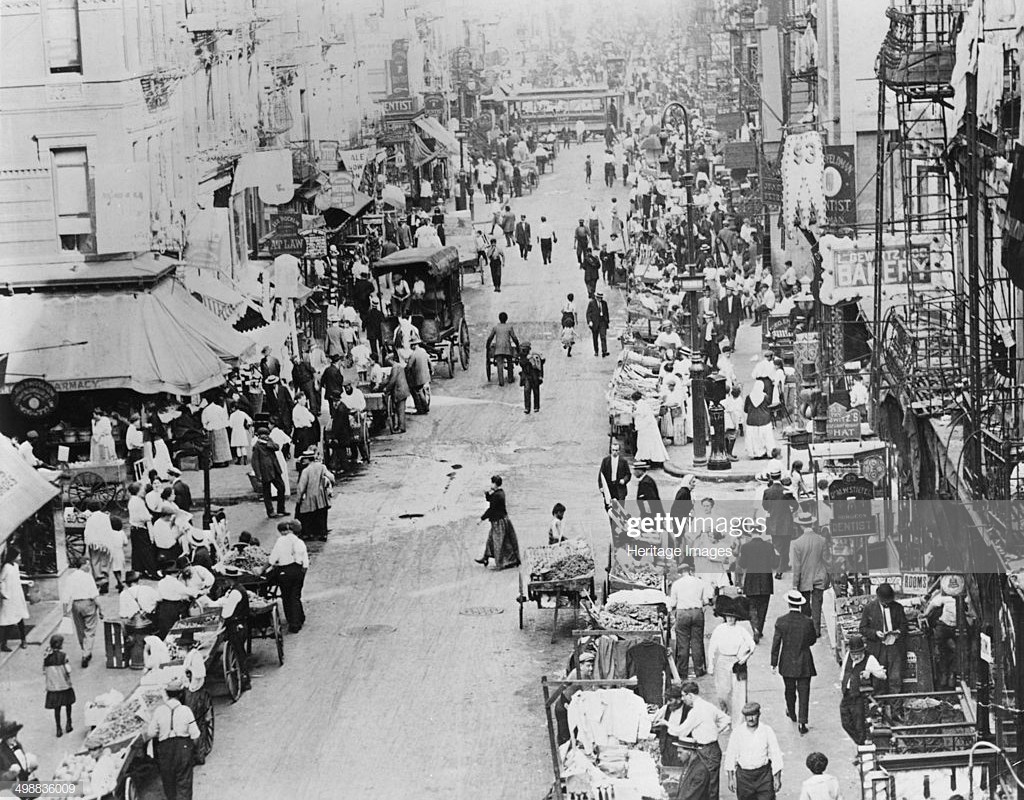
Remembering my childhood on Canal Street brings happy memories. When we moved there, four family houses stood in a row, over stores. Canal Street was a thoroughfare, and horse drawn trolleys went from the East Side to the West. The West Side was separated from the East Side by another wide thoroughfare, Broadway. The West Side was used for industry and extended all the way down to the river, where large ships came from all over the world with imports and exports. The East Side extended from Broadway to Delancey Street, and beyond that started the Uptown District.
All us kids attended Public School 23 on Mulberry School. There were children of all nationalities, and we got along well. I was good with languages and learned how to speak a little German and Yiddish (of course I also spoke English and my parents’ Calabrian-Italian dialect). After school, we played on the streets of New York City. We liked to jump rope, play tag, and all sorts of other games. The organ grinder with a monkey came around once a day. Oh how we waited for him! We would follow the organ grinder for blocks as his monkey, who was tied to the organ by a long string, would go around with a tin cup to all the storekeepers who would put a few pennies in his cup.
Sometimes, we would go over to Chinatown and buy Lychee Nuts. They were two for a penny and fortune cookies were a penny a piece. On the 4th of July, we went to Chinatown to buy firecrackers, a penny a piece. Although our neighborhood bordered Chinatown (and has since become a part of it), it seemed to us kids that the Chinese stayed within their own territory. They were peculiar to us — they wore their hair in long pigtails down their backs, wore sandals all the time, and smoked from long pipes. Once a city social worker disappeared in Chinatown. Her disappearance was never solved.
 Nobles Family Blog